There is a specific disappointment we never want attached to our name. It happens when somebody with a genuinely wet basement buys a small dehumidifier, runs it for a hopeful week, and concludes that dehumidifiers do not work. The machine was fine. The room was fine. The sizing was fiction, and everyone involved lost: the buyer lost a week and a return trip, and the whole category lost a little trust.
So this is our sizing guide, written backwards from that disappointment. We make exactly one machine, the CT2, which makes our incentives unusually easy to audit: we cannot upsell you to our bigger model, because there is none, and we have nothing to gain from stretching a coverage claim, because the reviews land on our own front page. What we can do is show you the arithmetic that decides whether a small machine will delight or annoy you, and let the numbers make the call.
What the box numbers actually are
Every dehumidifier arrives wearing two numbers: an extraction rate and a coverage area. Both are real measurements, and both are widely misread, so let us translate them.
The extraction rate says how much water the machine can pull from the air in 24 hours under stated test conditions. For the CT2 that ceiling is 34 ounces a day, measured in a test room held at 86 degrees Fahrenheit and 80 percent relative humidity. That room is deliberately tropical: warm air carries more water, so a warm, very humid room is where any dehumidifier posts its best score. Cool your bedroom to 68 degrees at 60 percent humidity and the same machine collects meaningfully less, not because it degraded but because there is less water arriving at its coils each hour. This is true of every machine on every shelf, including machines many times our size. The number is a ceiling, not a promise, and any page that quotes one without its weather is selling, not informing.
The coverage area says how far the machine's circulation usefully reaches in open, ordinary rooms. The CT2's stated reach is 1,000 square feet. Doors shrink it drastically, because a closed door is a wall as far as air is concerned. In practice we tell buyers to think of coverage as one continuous airspace: a large bedroom plus its bath with the door open counts. Three small rooms off a corridor do not, no matter what they sum to.
The three-question sizing test
Skip the marketing entirely and answer three questions about your actual room. They decide the purchase better than any spec sheet.
First: how much water arrives per day? You cannot meter this directly, but the sources rank reliably. Respiration and houseplants are light. Showers and cooking are moderate, and mostly removable by fans and lids first. Ground moisture through concrete, drying laundry indoors, or any active leak are heavy. Light and moderate sources in a normal room produce well under a liter a day, inside a small machine's reach. Heavy sources produce multiples of that, every day, without negotiating.
Second: how big is the continuous airspace? Pace it or estimate it, then apply the closed-door rule from above. Under about 250 square feet of continuous space with light-to-moderate sources is comfortable small-machine territory even in muggy weather. Up toward the stated coverage, a small unit still helps but works longer hours for each percentage point.
Third: how cold is the room? Thermoelectric machines like ours condense moisture on cooled plates, and the colder the ambient air, the smaller the temperature gap they can create. In a room below about 60 degrees, extraction falls off steeply. A heated bedroom is fine. An unheated crawl space in March is not, and no honest small-machine maker claims otherwise.
Sizing a dehumidifier is just a water balance. The room deposits so many ounces a day, the machine withdraws so many. If deposits exceed withdrawals, the account goes moldy, and no amount of optimism changes the arithmetic.
Score your room honestly against the three questions and you already know the answer. What remains is matching it to a shelf.
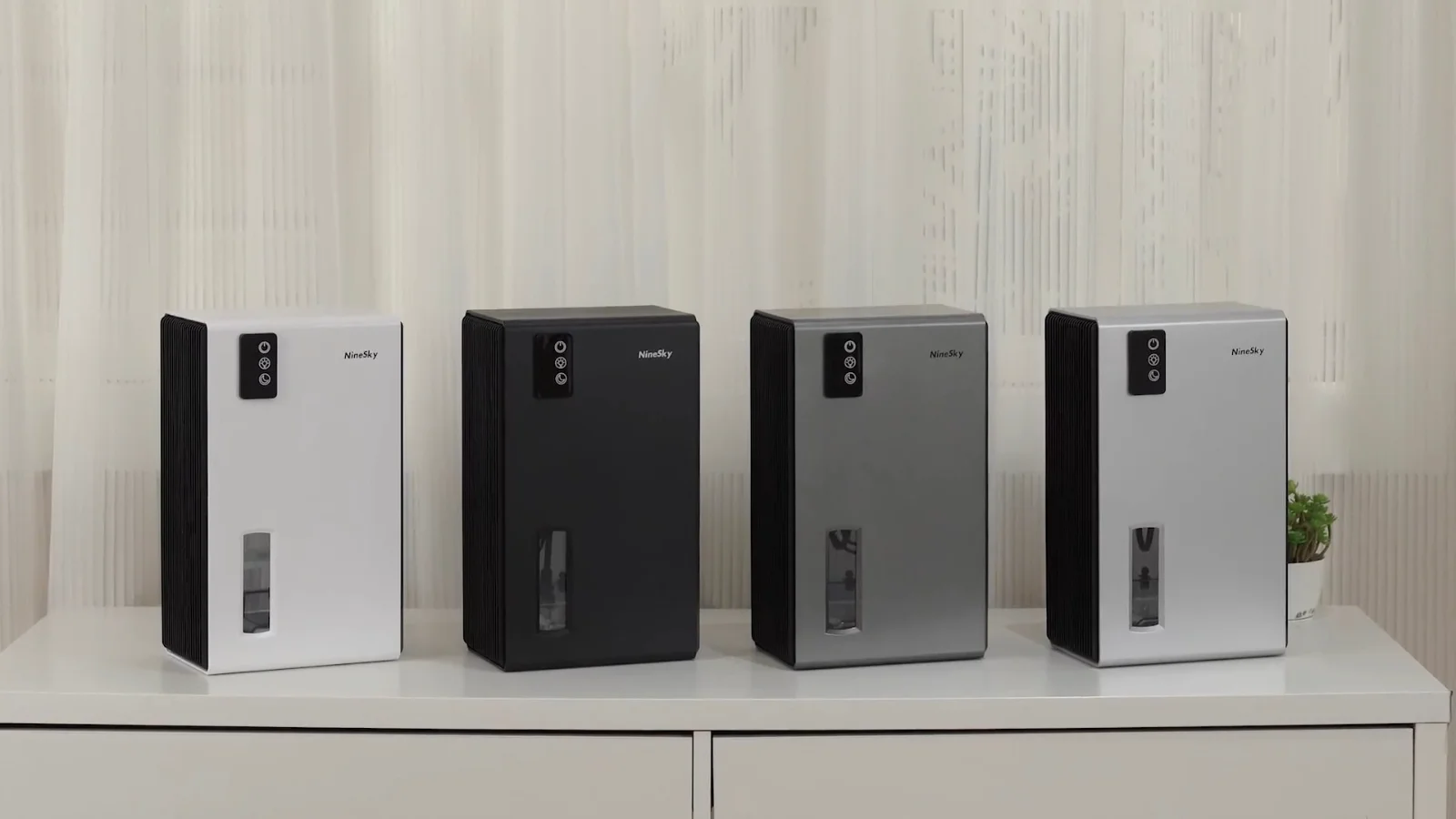
The four shelves, and who each one is for
| Room verdict | Right tool | Typical daily draw | What it costs you |
|---|---|---|---|
| Small room, everyday damp, heated | Thermoelectric unit such as our CT2 | Up to 34 oz under test conditions | $59.96 to $79.99 in our range, near-silence, one outlet |
| Large room or standing wet, any temperature | Compressor dehumidifier | 250 oz and up | Roughly $180 to $280, compressor noise, 30-plus lbs to carry |
| Cold space, garage or crawl space | Desiccant machine | Varies, holds up in cold | Higher running cost, warm exhaust air |
| A drawer, a car, one cabinet | Absorber tubs or rechargeable packs | An ounce or two, passively | Pennies up front, endless replacement |
The ENERGY STAR guidance sizes compressor machines in pints per day against how damp the space is, from the low twenties for slightly damp rooms to fifty-plus for wet ones, and it is the right reference if the middle rows of that table are where your room landed. We would rather hand you to that guidance than stretch ours: a 34-ounce machine is roughly a two-pint machine in that vocabulary, and no rounding makes it a basement unit.
What the table cannot show is the texture of the trade. The compressor machine's extra capacity arrives bundled with its noise, its weight and its price, all of which are wasted in a bedroom that only ever needed two pints of help. Oversizing is a quieter mistake than undersizing, but it is still a mistake. You pay for it in dollars, decibels and floor space rather than in mold.
Placement: the free capacity upgrade
Wherever the machine lands, placement moves its real-world numbers more than buyers expect, and the guidance here is blessedly simple. ENERGY STAR's placement advice, which we follow and reprint gladly: keep the unit away from walls and furniture so air can actually circulate through it, and keep the doors and windows of the space it is drying closed while it runs.
To that we add three CT2-specific notes from our support desk's mailbag. Set the machine on a firm, level surface, because the tilt-detecting shut-off is doing its job when it stops on a wobbly shelf. Give it the room's airflow crossroads rather than the deepest corner: the middle of a dresser beats the floor behind a chair. And empty the tank on a schedule rather than on the red light, because a machine that spends its nights stopped on a full tank is a machine you sized correctly and then benched.
A worked example, in ounces
Take the room we get asked about most: a 14-by-16 bedroom, two sleepers, attached bath with a working fan, radiator heat, muggy summers. Call it roughly 220 square feet of continuous space once the bathroom door stands open.
The deposits: two adults overnight, morning showers with the fan doing the burst removal, some ambient summer load through walls and windows. In the humid months this is comfortably under a liter a day of residual moisture for the machine to chase. In winter it may be nearly nothing.
The withdrawal: the CT2 at summer bedroom conditions will not hit its 34-ounce laboratory ceiling, and does not need to. Running evening and overnight on night mode, it stays ahead of the balance with the 95-ounce tank needing a pour every few days. The morning windows stop fogging, which was the symptom that started the search, and the hygrometer settles inside the EPA's 30-to-50 band, which is the goal our humidity-band guide exists to explain.
Now move the same machine to a 700-square-foot open-plan basement apartment with concrete walls and a laundry rack, and the balance flips. Deposits are heavy and continuous, withdrawals are capped, the tank fills daily and the hygrometer barely moves. Same machine, same honesty, opposite verdict, and the compressor shelf earns its noise.
Running costs, in the same honest currency
Purchase price is the number on the shelf. Running cost is the number on the year. Sizing decides both, and the arithmetic deserves the same daylight as the capacity claims.
A thermoelectric machine draws modest power continuously rather than heavy power in bursts. Run a unit like the CT2 through the nights of a humid season and the electricity involved is closer to a lightbulb habit than an appliance one. The exact bill depends on your rate and your hours, so a national average would be a fiction, and fictions are not what this page trades in. What we will say plainly is where the running-cost trap actually lives: it lives in mis-sizing, in both directions. An undersized machine runs around the clock chasing a balance it cannot reach, spending its watts on not solving the problem. An oversized compressor unit in a small bedroom spends capital, floor space and noise on capacity that mostly idles. The cheapest setup, across a whole year, is nearly always the machine whose honest daily draw sits a little above the room's honest daily deposit, which is exactly what the three questions above are for.
Efficiency labels help at the compressor end of the market. ENERGY STAR certifies dehumidifiers by liters of water removed per kilowatt-hour, and its certified compressor models remove the same water as conventional ones for about a fifth less energy, which compounds fast in a basement that runs all summer. At the small end, the honest efficiency lever is different: it is running the machine only in the hours and rooms where the water actually is. A CT2 on night mode in a closed bedroom, off at breakfast, spends nearly all its energy on the problem. The same machine humming all day in an open hallway spends most of it on the hallway.
What the mailbag actually asks
Years of sizing questions at our support desk repeat reliably, so here are the recurring ones, answered the way we answer them by mail.
Will it work in my bathroom with no window? Yes, and it is our most common posting. The condition is the fan-first rule from the placement section: a machine handles the residue, not the shower's live steam. If there is no fan at all and daily family showers, fix that first or expect the machine to lose gracefully.
Why is my tank filling slower than the number promised? Because your room is kinder than the test room, and that is good news. The 34-ounce figure was set at 86 degrees and 80 percent humidity, and a pleasant bedroom offers the machine far less water to catch. A slowing tank usually means the room is arriving inside the band, not that the machine is tiring.
Can it dry my laundry? It can shorten a drying rack's afternoon in a small closed room, and owners use it that way deliberately. What it cannot do is replace venting for a household's regular indoor drying habit, which produces water at a rate that belongs on the compressor shelf.
Should I leave it running while I travel? The shut-off makes it safe to, and a closed, empty home in a humid month is a reasonable use. For long absences we suggest the schedule most owners land on anyway: run it the day before you leave and the day you return, and let the closed house coast between.
Basement apartment, one room, ground-level damp: yours or bigger? Bigger, almost always. Ground moisture is continuous, and continuous heavy deposits beat a 34-ounce withdrawal every day of the week. This is the single most frequent question where our answer is a category, not our catalog.
When two small beats one big
One pattern from our reviews deserves its own paragraph. Households with two distant problem rooms, say a main-floor bathroom and an upstairs bedroom, sometimes ask which single large machine to put in the hallway between them. The honest answer is usually neither: a hallway machine dries the hallway. Two small units, each inside its own closed room, put the capacity exactly where the water is, cost less than most single compressor machines, and are each quiet enough for the room they serve. This is not us inventing a reason to sell two units. It is the closed-door rule doing its work. Air treats every shut door as a wall, so capacity that cannot reach the water might as well not exist.
The same logic scales down. A CT2 that lives in the bedroom can spend Saturday afternoon in the walk-in closet, because just over four pounds moves without ceremony. Owners tell us the machine migrates seasonally: bathrooms in summer, bedroom in the shoulder months, a closet reset between. A small machine you actually move outperforms a large one you park wrong.
The care that keeps the capacity
A sizing decision holds only as long as the machine keeps its rated draw, and small dehumidifiers lose capacity to neglect in exactly two places: airflow and the tank.
Airflow first. Dust on the intake is capacity theft, a few percent at a time, because the coils can only condense the air that actually reaches them. A soft brush or vacuum pass over the vents once a season keeps the path clear, and the away-from-walls placement rule is doing the same job from the outside. Nothing about this requires tools or ceremony, which is rather the point of the category.
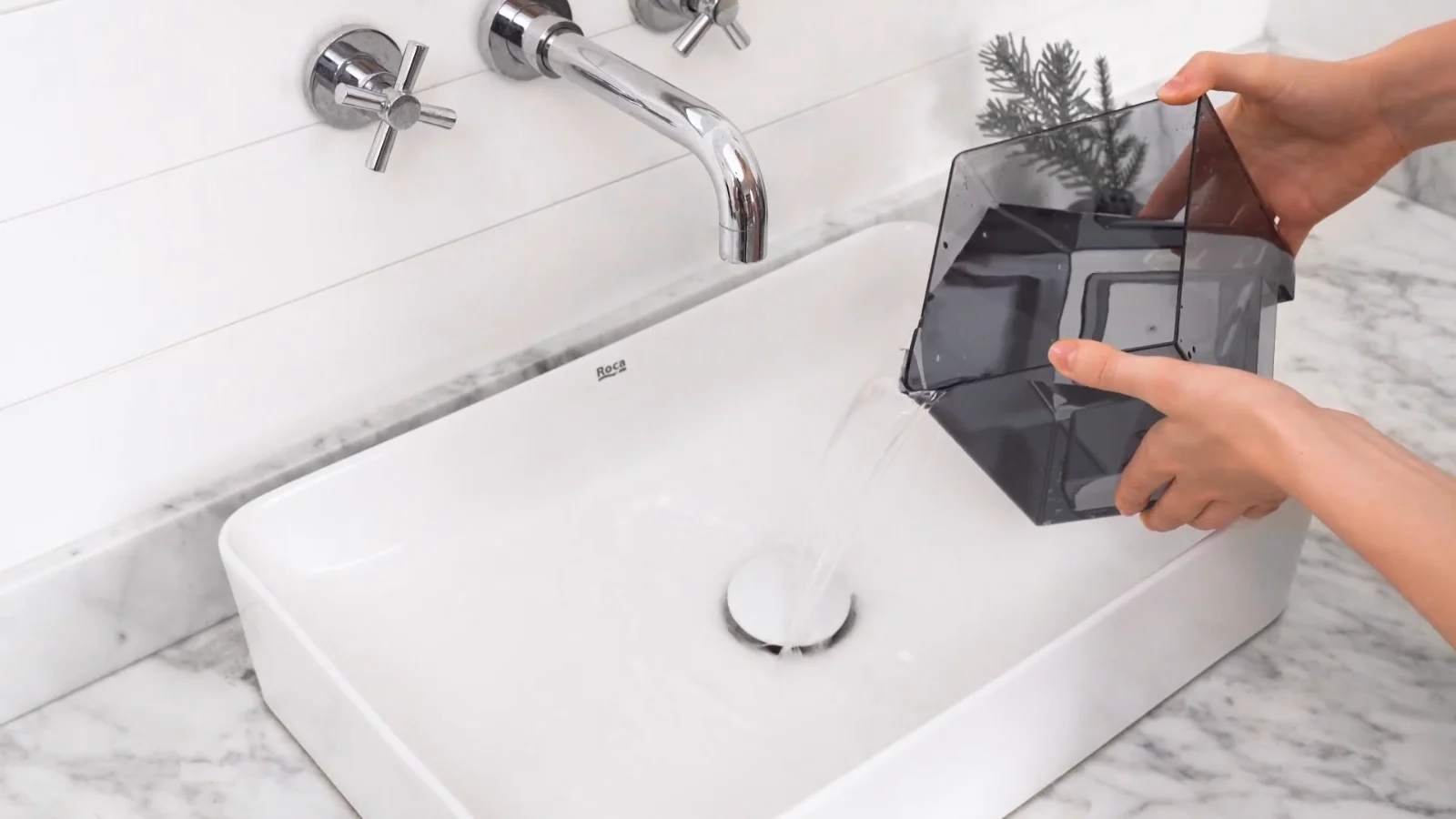
The tank second. Empty it on a schedule, rinse it when you do, and let it dry open now and then. A tank that stands wet for weeks grows the very film the machine exists to prevent. Seat it firmly after every pour, because the tilt shut-off will honestly refuse a crooked tank, and check the little rubber drain bung stays snug. It is the one part that walks off during an enthusiastic cleaning. Both consumables have their own buttons on our front page for the day one goes missing: the spare tank at $7.99 and the bung at $5.99, priced so that a lost part never argues for a new machine.
That is the entire maintenance calendar. No filters on a subscription, no refrigerant to service, no belts. A thermoelectric machine has almost no moving parts beyond its fan, which is both why it is quiet and why the care list fits in two paragraphs.
The short version, for the store aisle
Count the water honestly, pace the continuous airspace, feel the temperature. Everyday damp in a normal-size heated room is small-machine work, and ours does it for the price of a family dinner out, at a noise level you will forget. Standing water, big open volumes and cold spaces are compressor or desiccant work, and the right guide there is the ENERGY STAR sizing table, not us. If you are still unsure which side of the line your room sits on, write to the address in the footer and describe the room. The support desk answers sizing questions with the same arithmetic this page just used, and has talked at least as many people out of a CT2 as into one. Where the damp itself comes from, room by room, is mapped in our room-by-room guide, and every figure quoted above carries its date in the update log.
Keep reading
- Where the Damp Starts: A Room-by-Room Guide to Moisture at Home. Every room gets damp for its own reason. The bathroom steams, the basement seeps, the closet just sits still. Here is where the water comes from in each one, and what actually stops it.
- Living at 30 to 50 Percent: A Year of Indoor Humidity, Managed. The EPA band for indoor humidity is 30 to 50 percent. Holding a home inside it is a routine, not a purchase. Here is the year, season by season, with the readings that matter.
- Or go back to NineSky dehumidifiers and the full range on the front page.
